 Contact us
Message from the President
- HOME
- About the Japan Landslide Society
- Message from the President
Toward the Further Development of the Japan Landslide Society
WANG Gonghui, President, Japan Landslide Society
Professor, Disaster Prevention Research Institute, Kyoto University
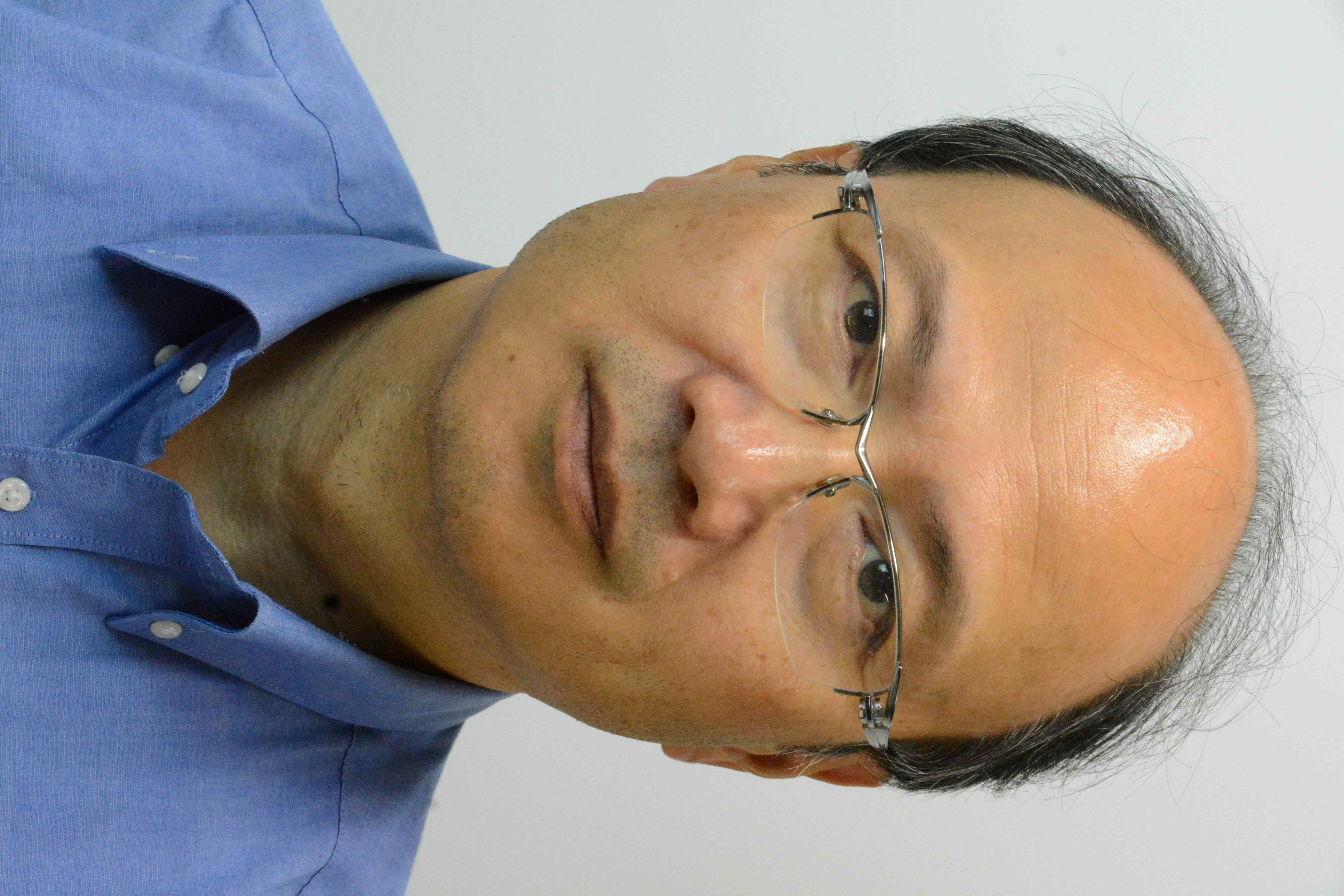 At the Meeting of the Board of Directors held on June 12, 2026, I was deeply honored to be elected as the 22nd President of the Japan Landslide Society. Reflecting upon the tremendous contributions made by the former presidents and senior members who have long supported and advanced our Society, I keenly feel the weight of this responsibility. Although my abilities may be limited, I am fully committed to dedicating my utmost efforts to the continued development of the Society and to advancing scientific research and technologies that contribute to the mitigation of landslide disasters. I sincerely ask for the continued support and cooperation of all our members.
Since its establishment in 1963 as the Comprehensive Landslide Research Group, the Japan Landslide Society has promoted fundamental research and technological development related to landslides for more than six decades, making significant contributions not only in Japan but also to the advancement of landslide disaster prevention worldwide. One of the Society’s greatest strengths lies in its interdisciplinary research community, where researchers from diverse fields, including natural sciences, engineering, agriculture, and social sciences, gather to engage in collaborative and interdisciplinary discussions. Through close cooperation among experts from academia, government, and industry, the Society has advanced studies on landslide mechanisms, hazard assessment methodologies, and mitigation technologies, resulting in Japanese landslide disaster prevention technologies achieving an exceptionally high international standard.
In particular, Japan has played a pioneering role in research on earthquake-induced landslides. The extensive knowledge accumulated through numerous field, laboratory, and theoretical studies has profoundly advanced our understanding of coseismic landslides, serving as a vital reference for researchers worldwide. Furthermore, the activities of the Japan Landslide Society have extended far beyond national boundaries, substantially enriching global landslide research through international academic exchange and technical cooperation.
However, recent changes in both the natural and social environments are rapidly reshaping the context of landslide disasters. In addition to increasing human exposure to seismic activity, climate change and the growing occurrence of extreme rainfall events have made landslide disasters more frequent, severe, and diverse. Despite the substantial accumulation of research achievements and mitigation technologies, new types of landslides and increasingly difficult-to-predict landslides continue to emerge in many regions, heightening societal expectations for effective disaster risk reduction. In this period of profound change, I firmly believe that the role of our Society is becoming more important than ever.
To effectively address these pressing challenges, I would like to highlight four priority directions for our Society in the coming years.
1. Further Advancement and Innovation in Fundamental Research
Landslides are complex natural phenomena driven by the intricate interaction of geology, topography, groundwater, and seismic motion; consequently, many aspects of their triggering mechanisms remain unresolved. Building upon our established foundation of observational studies, laboratory experiments, and theoretical analyses, we must actively integrate pioneering research methodologies. Specifically, leveraging high-resolution topographic data, satellite observations, remote sensing technologies, and big-data analytics will deepen our understanding of landslide mechanisms and enable the establishment of more accurate, reliable hazard assessment methods.
2. Establishing New Research Infrastructure for Next-Generation Landslide Disaster Prevention
Recent leaps in observation and information technologies are driving a major paradigm shift in landslide research methodologies. The widespread adoption of satellite observations, drone-based surveys, and IoT monitoring devices now allows us to continuously and accurately monitor slope deformation and groundwater dynamics. By integrating these datasets with numerical simulations and AI technologies, we can replicate and predict landslide processes with unprecedented precision. Moving forward, we will actively promote new disaster prevention frameworks, including “digital twin-based landslide hazard assessment” and real-time monitoring systems driven by these emerging technologies.
3. Social Implementation of Research Outcomes and Robust Human Resource Development
The ultimate value of academic research lies in its contribution to public safety and societal well-being. It is vital that we translate the knowledge and technologies accumulated within the Society into accessible insights for government agencies, local communities, and disaster management practitioners, thereby shaping better disaster prevention policies and engineering practices. Furthermore, it is necessary to strengthen collaboration with society through post-disaster field investigations, information dissemination, disaster education, and outreach activities. At the same time, fostering young researchers and engineers who will lead the field of slope disaster prevention is an urgent challenge. As a Society, we believe it is essential to provide attractive opportunities for academic exchange where young members can actively engage and thrive, thereby cultivating the next generation of professionals responsible for future slope disaster mitigation efforts.
4. Expanding Contributions to the International Community
Our Society has historically played a vital role on the global stage. Major international forums, such as the International Symposium on Landslides (ISL) and the International Conference and Field Trip on Landslides (ICFL), were originally proposed and developed by our members, and they remain premier global platforms for landslide research. Additionally, the International Consortium on Landslides (ICL) and its flagship journal Landslides, both established through the initiatives of our Society, serve as the central hubs for global landslide science. Honoring this legacy of leadership, the Society must continue to steer the international community. Notably, landslide occurrence-time prediction methods proposed by our members, alongside advanced experimental apparatuses (such as the undrained ring shear apparatus developed in Japan) are widely utilized worldwide, contributing immensely to both fundamental science and disaster reduction. We remain dedicated to actively sharing such outstanding, Japan-born technologies and insights with the world.
Mitigating landslide disasters is a critically important challenge directly linked to the safety of local communities and the realization of a sustainable society. I believe that one of the fundamental missions of our Society is to disseminate the knowledge and technologies accumulated over many years to society and thereby contribute to the advancement of landslide disaster risk reduction.
The vitality of our Society depends on the active participation and engagement of each member. Through a wide range of initiatives, including annual meetings, symposia, committee activities, and international exchanges, we will continue to foster interaction and collaboration among members, promote the advancement of research and technology, and further enhance the attractiveness and dynamism of the Society.
Together with our 22-member Board of Directors, including Vice Presidents ISHIMARU Satoshi and TSUTSUMI Daizo, Executive Director SATO Hiroshi, our five Divisions, seven Regional Branches, and the Society Secretariat, I will devote my utmost efforts to these endeavors. I sincerely ask all members for your continued participation, support, and cooperation in the activities of the Japan Landslide Society.